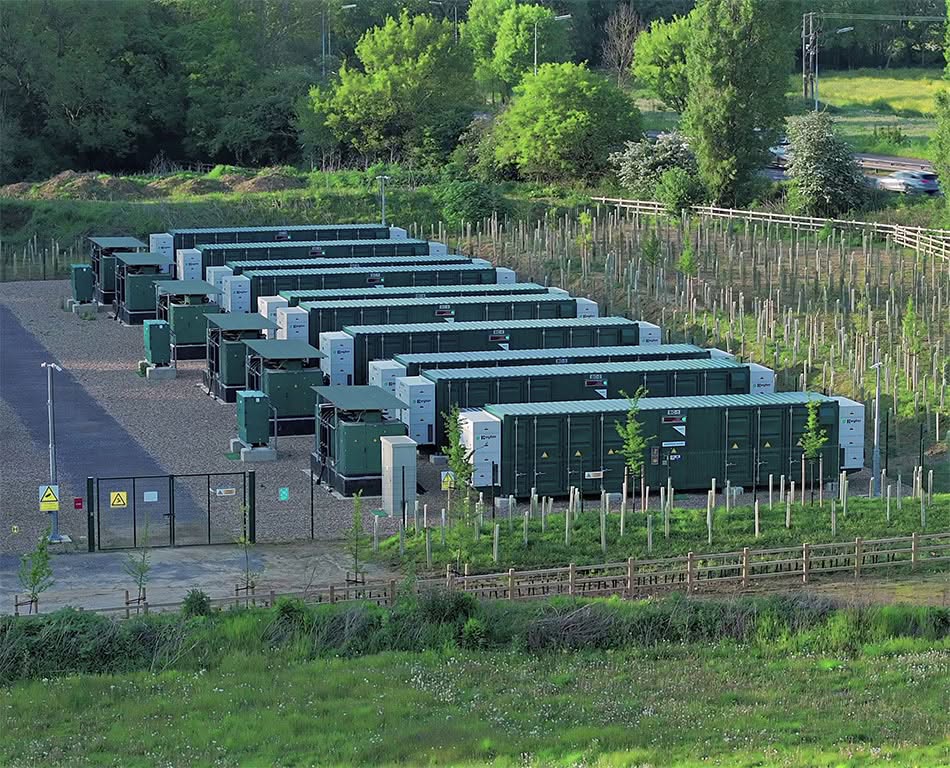
Solar Battery Rebates Australia

Solar Battery Rebates Australia: 2026 National Guide to Energy Storage Incentives

Solar battery rebates in Australia are delivered through a mix of federal incentives (STCs under the Small-scale Renewable Energy Scheme) and state-based programs that can further reduce upfront costs. This guide explains how the federal discount works, what changes from 1 May 2026, and where to find state-specific rebate rules and stacking examples.

Looking for system-wide savings? Start with our Solar Rebates hub.

Important: Federal battery discounts change from 1 May 2026

Subject to regulations, the Cheaper Home Batteries Program will adjust from 1 May 2026, including more frequent declines in the STC factor and reduced support for larger battery capacities.

FINAL CHANCE!

Battery Incentives Reducing From

May 1st

Hurry! Last Chance to Lock In Your 2026 Battery Incentives
BOOK NOW!

Federal Battery Discount (Cheaper Home Batteries Program)

From 1 July 2025, eligible battery systems can receive a discount through STCs under the Small-scale Renewable Energy Scheme (SRES). The discount is calculated from the battery’s usable capacity and the number of STCs the system can create.

Federal eligibility checklist

  • Battery capacity: Eligible batteries are typically within 5 kWh to 100 kWh usable capacity.
  • Solar connection: Batteries can be connected to new or existing solar PV.
  • Approved equipment: Battery must be Clean Energy Council (CEC) approved.
  • Accredited installer: Installation must be completed by an accredited provider.
  • Discount declines over time: Settings are reviewed and decline through to 2030.

How most households access the discount

  • Installer/retailer pathway (most common): You receive an upfront reduction on your quote or invoice, or a rebate after installation.
  • Self-claim pathway (less common): Some consumers can create and trade STCs directly instead of assigning STCs to an installer.

Important: The federal battery rebate is not a cash payment from the government. It is delivered as a discount through STCs, usually applied by your installer or retailer.

Why the federal battery rebate exists

  • To reduce upfront cost barriers to home and small business battery storage.
  • To help households store and use more of their own solar energy.
  • To improve grid stability by reducing peak demand.
  • To support long-term uptake of battery storage through to 2030.

Official program update (DCCEEW) | STC calculator (REC Registry)
Contact Us Today
Federal Solar Battery Rebate - Starts July 2025

What Changes on 1st  May 2026

Subject to regulations being made, the Cheaper Home Batteries Program is expected to change from 1 May 2026 in two important ways: the STC factor will reduce and decline more frequently, and the discount will taper by battery size.

1) STC factor reduces and declines every 6 months

  • January to April 2026: STC factor 8.4
  • May to December 2026: STC factor 6.8

The STC factor that applies on the installation date affects how many STCs are created and therefore the value of the discount.

2) Larger batteries receive reduced support above key thresholds

From 1 May 2026, the STC factor is expected to apply in capacity bands (tapering support as battery size increases):

Usable capacity band How the STC factor applies What it means for sizing
0–14 kWh (inclusive) 100% Best-value band for federal support.
>14–28 kWh (inclusive) 60% Reduced support on capacity above 14 kWh.
>28–50 kWh (inclusive) 15% Significantly reduced support on additional capacity.

Practical implications

  • Timing matters: Installing before 1 May 2026 may result in a higher federal discount than installing after that date.
  • Sizing matters: After 1 May 2026, batteries above 14 kWh may receive reduced federal support on the extra capacity.
  • Recommendation: Size the battery to match your household load profile, solar production, and inverter capability rather than choosing the largest option by default.

STC factor changes over time (2026–2030)

The table below outlines how the STC factor is expected to change from 2026 to 2030, comparing the existing annual step-down approach with the proposed more frequent reductions from May 2026.


Year Period Existing STC factor Proposed STC factor
2026 January – April 8.4 8.4
2026 May – December 8.4 6.8
2027 January – June 7.4 5.7
2027 July – December 7.4 5.2
2028 January – June 6.5 4.6
2028 July – December 6.5 4.1
2029 January – June 5.6 3.6
2029 July – December 5.6 3.1
2030 January – June 4.7 2.6
2030 July – December 4.7 2.1

Important: The STC factor is only one part of how the federal battery discount is calculated. The final discount value also depends on battery size, capacity tapering rules, and the market price of STCs at the time of installation.

Battery Demand and Installation Timing

Battery uptake has accelerated nationally. Market reporting indicates strong demand for battery installations and increasing volumes of battery rebate activity, which can contribute to longer lead times for quoting, approvals, and installation in some regions.

  • Plan ahead: If you want an install completed before rebate settings change, allow extra time for product availability and scheduling.
  • Right-sizing avoids waste: Oversizing can reduce value, especially once tapering applies after May 2026.

Installing before 1 May 2026 may result in a higher federal discount for the same battery compared to installations after this date.

HURRY!

Last Chance to Lock In Your 2026 Battery Incentives
Battery Incentives Reducing From May 1st. Secure Full Incentive Today!
Get Your Savings Today

State-Level Battery Incentives

In addition to the federal battery discount, some states and territories offer their own battery incentives, loans or bonus schemes. These programs may be able to be combined with the federal discount, depending on eligibility rules.
  • New South Wales (NSW)

      • Current incentives: Peak Demand Reduction Scheme (PDRS) battery discounts via approved providers.
      • Options: VPP participation may provide additional benefits where available.
    Explore NSW rebates
  • Victoria (VIC)

      • Current incentives: State-supported pathways may apply depending on eligibility and program settings.
      • Options: Federal STCs remain available for eligible battery systems.
    Explore VIC rebates
  • Queensland (QLD)

      • Current incentives: Most households rely on federal STCs for battery discounts.
      • Options: Retailer offers and VPP programs may provide additional savings where available.
    Explore QLD rebates
  • South Australia (SA)

      • Current incentives: Federal STCs remain the main battery discount mechanism.
      • Options: VPP and retailer-linked battery offers may apply depending on provider and location.
    Explore SA rebates
  • Western Australia (WA)

    • Current incentives: Availability depends on state programs and eligibility settings at the time.
    • Options: Federal STCs remain available for eligible battery systems.
    Explore WA rebates
  • Australian Capital Territory (ACT)

    • Next Gen Energy Storage Program: Program concluded in 2023.
    • 2025 options: No current ACT government battery rebate listed under that program; residents can access federal STCs.
    Explore ACT rebates

Saving Millions, Planting Billions

1

Rated Warranty

50,000

Tons CO2 Reduction

50,000,000

Generated In Savings

200,000,000

Trees Planted

Tagline

What Makes a Battery Rebate-Eligible?

What Makes a Battery Rebate-Eligible?
  • CEC-approved equipment: Battery is listed as approved on the relevant product registry.

  • Accredited installation: System is installed by an accredited installer.

  • Correct system design: Battery is sized appropriately for the home’s solar production, inverter capacity, and energy use.

  • Compliance: Installation meets electrical safety requirements and program rules.

1300 339 596

Little Effort, Big Results

Solar Is Simple With SolarGalaxy.

We Get to Know Your Energy Needs.

No cookie cutters in our tool box! We tailor the perfect solar or storage system based on your needs.

1

Leave It to the Pros.

Our expert team swoops in, designing and installing a customised solution so you can thrive from day one. We handle everything—no sweat for you!

2

Pick Your Plan. Power Your Home.

Choose a payment option that suits your needs—from no money down to predictable monthly payments, leases or upfront – You’re in charge!

3

Sit Back, We’ve Got This!

We’ve got your back with 24/7 system monitoring, guarantees, and top-tier customer support. Together, we’re creating a cleaner, greener planet—powered by the sun.

4

Why Choose Solar Galaxy for Battery Installations

Solar Galaxy provides integrated solar + battery systems designed to meet all rebate and VPP criteria for homes and businesses:
  • Real-time STC and battery rebate deductions

  • VPP-ready designs with smart inverter matching

  • Partner brands include Tesla Powerwall, Sungrow, LG Chem

  • SA Solar Panel Rebates

DON’T MISS OUT!

Battery Incentives Reducing From 1st May

FINAL CHANCE to Secure Full Incentive Today! Hurry!
BOOK NOW!

FAQs About Battery Rebates

Got Questions About Solar Rebates in Australia? We’ve Got Answers!

The federal battery discount is delivered through STCs under the Small-scale Renewable Energy Scheme (SRES) for eligible battery systems, typically applied as an upfront reduction through an accredited installer or retailer.

Yes. From 1 May 2026, the STC factor is expected to reduce and decline more frequently, and support is expected to taper across battery size bands.

Yes. From 1 May 2026, full support is expected to apply to the first 14 kWh of usable capacity, with reduced support applying to additional capacity bands above that threshold.

Yes. Batteries connected to existing solar PV can qualify for the federal discount, subject to eligibility rules.

No. VPP participation is not required for the federal discount, but some state programs or retailers may offer additional incentives for VPP participation.

Often, yes. Stacking depends on the state program’s terms and eligibility rules. Use your state rebate page to confirm compatibility and claim pathways.

Yes. These programs are designed to be combined where eligible.
Not always, but joining a VPP can provide bonus rebates or bill credits.
Yes, as of July 2025 federally, and via some state schemes.

Battery Pricing  with Rebates

28 kWh Battery
Modern homes with
EVs or pool heating
From $25/week*
Save~
$
6,990
+/yr
Unlock Savings Now
14 kWh Battery
Small families
From $19 / week*
Save~
$
2000
+ /yr
Unlock Savings Now

* 10 Years Brighte Plan

All plans come with: 10 years Warranty, and Lifetime Support via Solar Galaxy & Manufacturer